

In industries where machinery reliability is essential, unexpected downtime can have serious consequences. Whether operating marine engines, power generation equipment or industrial machinery, keeping equipment running efficiently is a priority for businesses looking to reduce costs and improve productivity.
Technology has transformed the way operators monitor equipment performance. Rather than relying entirely on manual inspections and fixed maintenance schedules, businesses can now use monitoring systems to identify potential issues and make more informed decisions. One area where this technology can provide significant advantages is lubricating oil filtration.
Clean oil is essential for protecting critical engine components, reducing wear and maintaining reliable operation. However, effective filtration is only part of the solution. Understanding when a filtration system requires attention is equally important. By combining advanced centrifugal oil filtration with remote monitoring technology, IOW Group helps operators take a more informed approach to maintenance, reducing unnecessary servicing while supporting improved equipment reliability.
Why Is Monitoring Important for Engine Maintenance?
Traditional maintenance programmes often rely on predetermined servicing intervals. Components are inspected, filters are changed and oil is replaced according to operating hours or scheduled maintenance periods. Although this approach provides consistency, it does not always reflect the actual condition of the equipment.
For example, two engines operating for the same number of hours may experience different contamination levels depending on their operating conditions, load and environment. One centrifugal oil filter may require servicing sooner than expected, while another may still have capacity to continue operating effectively. Without monitoring, engineers may have limited visibility of these differences.
Condition-based maintenance offers an alternative by using information about equipment condition to help determine when servicing is required. This approach can reduce unnecessary maintenance, improve resource planning and help operators identify developing issues before they lead to more significant problems.
The Importance of Clean Lubricating Oil
Lubricating oil performs several essential functions within an engine, including reducing friction, transferring heat and protecting moving components against wear. However, during operation, oil can become contaminated with soot, carbon, metallic wear particles and other impurities. If these contaminants remain in circulation, they can contribute to:
Increased abrasive wear
Sludge and deposit formation
Changes in oil viscosity
Reduced lubricant effectiveness
Shorter primary filter service intervals
Increased maintenance requirements
Maintaining oil cleanliness is therefore an important part of protecting engines and machinery. While regular oil changes help manage lubricant condition, replacing oil solely according to a fixed schedule may not always be the most economical approach. Effective filtration, supported by oil analysis and appropriate monitoring, can help operators make better use of their lubricants while maintaining equipment protection.
What Is a Centrifugal Oil Filter?
A centrifugal oil filter uses centrifugal force to separate contaminants from lubricating oil. Unlike conventional barrier filters, which capture particles within filtration media, centrifugal filters use high-speed rotation to separate substances according to their relative density. Typically installed as bypass filtration systems, centrifugal oil filters process a proportion of the circulating oil without interfering with the engine’s primary lubrication requirements.
Contaminated oil enters the centrifuge and causes the internal bowl to rotate at high speed. The resulting centrifugal force drives denser particles towards the outer wall, where they accumulate. The cleaned oil is then returned to the lubrication system, allowing the process to continue. Because centrifugal filtration does not rely on disposable fine-filter cartridges, the collected sludge can be removed during servicing without continually replacing filtration elements. This provides an effective method of controlling fine contamination while helping reduce consumable filter waste.
Remote Monitoring as Standard
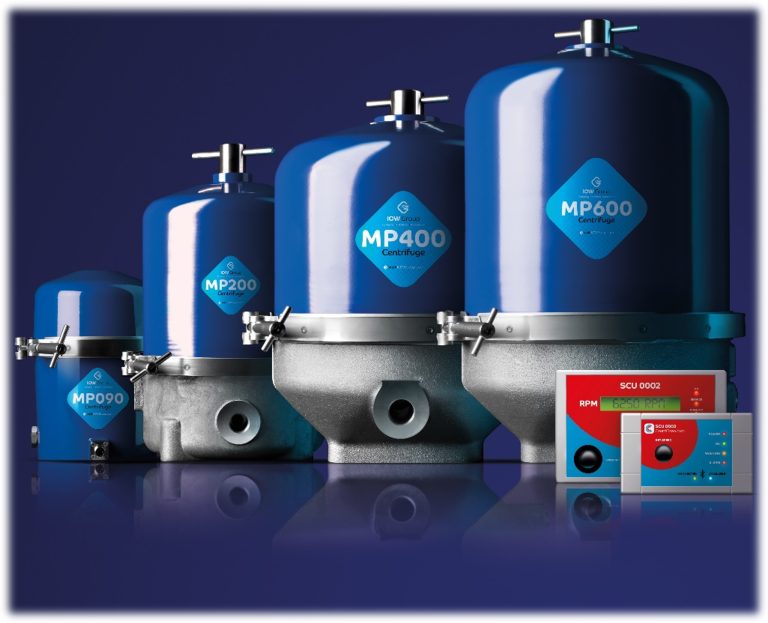
One of the key advantages of IOW Group centrifugal oil filters is the inclusion of remote monitoring technology as standard. IOW Group’s CentriClean SCU (Separator Control Unit) provides operators with information about centrifuge operation by monitoring rotational speed. As contamination accumulates inside the centrifuge bowl, the additional load can cause the RPM to decrease.
By monitoring these changes, the SCU helps operators identify when the centrifuge may require servicing. This provides a more informed alternative to relying solely on fixed maintenance intervals. Rather than opening the centrifuge to inspect sludge accumulation unnecessarily, engineers can use monitoring information to help assess its operating condition. The result is a more efficient approach to filtration maintenance.
What Are the Benefits of Remote Centrifuge Monitoring?
1. Reduce Unnecessary Maintenance
Without monitoring, centrifugal filters may be serviced according to predetermined intervals, regardless of how much contamination has accumulated. This can result in unnecessary inspections, maintenance labour and equipment downtime. Monitoring centrifuge RPM provides an indication of when servicing may be required, helping operators schedule maintenance more effectively.
2. Improve Equipment Reliability
An effective filtration system is essential for maintaining clean lubricating oil. Monitoring helps operators understand whether their centrifuge is functioning as expected and can provide an indication when attention is required. By supporting timely maintenance, remote monitoring helps keep the filtration system operating effectively.
3. Reduce Maintenance Costs
Maintenance requires engineering time, resources and sometimes equipment shutdowns. Reducing unnecessary servicing can help businesses make better use of maintenance personnel and minimise avoidable expenditure. For operators managing multiple engines, these efficiencies can become particularly valuable.
4. Support Condition-Based Maintenance
Remote monitoring helps businesses move towards maintenance decisions based on equipment condition rather than operating hours alone. By using centrifuge performance information, engineers can better understand servicing requirements and plan maintenance around actual operating conditions. This supports a more proactive and efficient maintenance strategy.
5. Reduce Oil Waste
Improved filtration helps maintain lubricant cleanliness by removing harmful contamination from circulation. Where supported by oil analysis and manufacturer recommendations, cleaner oil can contribute to extended oil-change intervals. This can reduce the volume of replacement oil required and the amount of waste oil needing disposal. For businesses looking to improve sustainability, effective filtration and monitoring can therefore support both environmental and operational objectives.
IOW Group: Combining Filtration and Monitoring Technology
IOW Group’s centrifugal oil filters bring together advanced separation technology and intelligent monitoring to provide an effective oil cleaning solution. The range includes the MP090, MP200, MP400, MP500 and MP600, with options suitable for different engine sizes and applications. Key features include:
Patented disc-stack technology to improve contaminant separation
High-speed centrifugal operation for effective soot and sludge removal
Fully sealed bowl design for cleaner servicing
Remote monitoring as standard to track centrifuge RPM
Distributor impeller technology designed to minimise backpressure
Straightforward retrofit options for replacing existing centrifugal filters
No disposable fine-filter cartridges required within the centrifuge
IOW Group centrifugal filters are suitable for applications across marine, power generation, mining, transport and industrial machinery. With retrofit-compatible designs available, operators can upgrade existing centrifugal filtration systems without necessarily requiring extensive modifications.
Smarter Maintenance Starts with Better Information
Effective oil filtration is essential for protecting engines, but understanding filtration performance can make maintenance more efficient. Traditional servicing methods often depend on fixed schedules and manual inspections.
Remote monitoring provides additional information that helps operators make decisions based on the condition of their equipment. By combining patented disc-stack technology with remote monitoring as standard, IOW Group centrifugal oil filters provide more than just effective contaminant removal. They help operators maintain cleaner lubricating oil, reduce unnecessary maintenance and support more reliable equipment operation. For businesses focused on improving productivity, reducing operating costs and minimizing waste, advanced centrifugal filtration and monitoring offer a practical solution.