
Mining equipment is built to work hard. Excavators, haul trucks, generators, compressors and other heavy-duty machinery routinely operate in environments where dust, dirt, heat, vibration and heavy loads are unavoidable. Combined with long operating hours and demanding production schedules, effective lubrication becomes critical to keeping equipment productive.
For mining operators, effective mining oil filtration is about more than keeping oil in their machinery clean. It’s about controlling contamination, protecting expensive engine components, reducing avoidable wear and supporting equipment availability.
A centrifugal filter for mining equipment can provide an additional layer of protection alongside an engine’s existing filtration system. Using centrifugal force, the filter continuously separates particulates and combustion by-products from lubrication oil that could otherwise continue circulating through the engine.
The Contamination Challenge in Mining Machinery
Mining environments present a particularly challenging combination of contamination risks. Fine airborne dust and dirt can enter machinery through the operating environment, maintenance activities and normal engine breathing systems. Once inside the lubrication system, these particles can circulate with the oil and contribute to abrasive wear.
Environmental contamination is only part of the problem. Diesel engine oil is also exposed to soot, oxidation products, combustion by-products and microscopic wear particles. As components wear, additional metallic particles can enter the oil, creating a cycle where contamination contributes to wear and wear generates further contamination. Conventional full-flow filtration remains an essential part of engine protection, but bypass centrifugal filtration approaches contamination differently.
Rather than relying on conventional filter media, oil enters a rotating centrifugal separator where centrifugal force drives denser contaminants towards the outer bowl. The contaminants accumulate as sludge while cleaner oil is returned to the lubrication circuit. This makes centrifugal filtration particularly valuable for heavy-duty applications where maintaining oil cleanliness over extended operating periods is important.
Why Centrifugal Oil Filtration is Different
The principle behind centrifugal oil filtration is relatively simple, but IOW Group has developed the technology further.
IOW Group’s MP centrifugal separators incorporate a unique disc-stack arrangement within the bowl. The discs increase the effective separation area, helping the centrifuge remove finer particulate contamination while minimising cross-contamination between dirty oil entering the unit and cleaned oil leaving it. Contaminants therefore accumulate within the separator bowl and are physically removed during servicing.
IOW Group’s centrifugal filters also incorporate remote monitoring through a Separator Control Unit (SCU). This allows operators to monitor centrifuge performance and identify when servicing is required, helping remove the guesswork from maintenance and enabling a more condition-based approach.
Versatile Filtration for Mining Equipment
One of the challenges facing mining operators is the sheer variety of equipment operating across a site.
Excavators and haul trucks can work alongside generators, compressors and other mobile or stationary machinery, each with different oil capacities and operating requirements.
IOW Group’s MP centrifugal filter range provides options for different applications and oil sump capacities. The MP090 centrifugal oil filter, for example, is designed for engines and machinery with oil sump capacities of approximately 15–90 litres, making it suitable for applications including mining equipment, generators and compressors.
Importantly, centrifugal filtration does not necessarily require the replacement of an existing lubrication system. It can be installed as a bypass filtration stage alongside existing full-flow filtration, making it particularly suitable for retrofitting existing mining assets.
Proven on Heavy-Duty Equipment
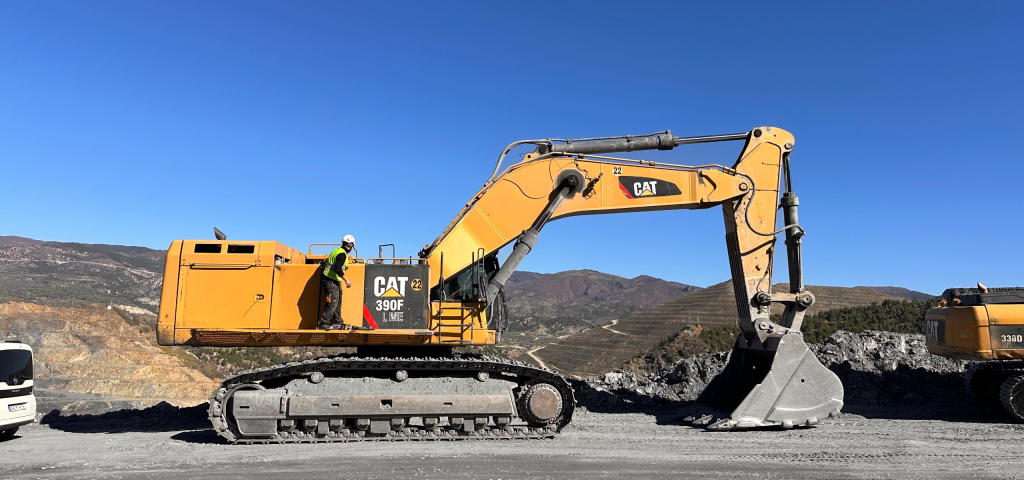
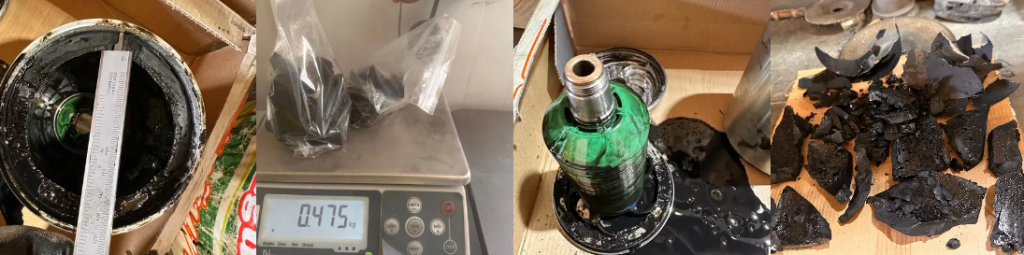
A good example is IOW Group’s installation of an MP090 on a CAT 390F hydraulic excavator, powered by a C18 ACERT engine. The MP090 was incorporated into the existing engine oil circuit to investigate whether additional centrifugal filtration could improve lubrication oil cleanliness under demanding operating conditions. After 700 operating hours, the MP090 had collected 475 grams of contaminants, producing an approximately 11mm sludge cake.
While individual results will vary depending on engine design, oil condition, operating load and maintenance practices, the trial demonstrates the quantity of contamination that can be removed from circulation within a heavy-duty engine. IOW Group has also documented an MP090 retrofit on a CAT 3406 engine. During the reported trial, oil cleanliness improved from an ISO code of 21/18/12 to 19/17/12.
For mining operators, retrofit installations provide an opportunity to trial improved oil filtration on existing assets without waiting for equipment replacement.
Reducing OPEX and Supporting Equipment Availability
In mining, downtime is expensive. When a critical excavator, haul truck or generator becomes unavailable, the impact can extend well beyond the immediate repair cost. Production may be disrupted, maintenance resources diverted and replacement equipment required.
That’s why the business case for centrifugal oil filtration for mining equipment extends beyond simply collecting contaminants.
Cleaner lubrication oil can contribute to:
- Reduced exposure of engine components to abrasive particulates
- Reduced engine and component wear
- Improved equipment reliability and availability
- Potentially longer oil service intervals, subject to oil analysis and OEM requirements
- Reduced maintenance and consumable requirements
- Improved protection of high-value machinery
- Greater opportunity for planned rather than reactive maintenance
- Lower overall operating expenditure (OPEX)
The key is measuring these improvements. Operators can establish a baseline using oil analysis, maintenance records, oil changes, operating hours and component history before installing a centrifugal filter. Performance can then be monitored following installation to establish the potential operational and financial benefits.