
Pumps play an essential role in countless industrial processes, transferring lubricating oils, fuels and other fluids reliably from one part of a system to another. Although their function may appear straightforward, choosing the correct pump can have significant impact on efficiency, maintenance requirements, operating costs and overall equipment reliability.
One important consideration is how the pomp contains the fluid being transferred. Traditional pump designs commonly use mechanical shaft seals to prevent fluid from escaping around rotating components. While effective for many applications, mechanical seals are wear components and can eventually require maintenance or replacement.
Sealless magnetic drive pumps offer a different approach. By using magnetic force to transfer power between the motor and pump, the need for a conventional mechanical shaft seal can be eliminated.
What is a Sealless Magnetic Drive Pump?
A magnetic drive pump transfers power from the motor to the pumping mechanism through a magnetic coupling. Rather than having a conventional drive shaft pass through the pump casing, magnets transmit the rotational force required to operate the pump. The pumped fluid can therefore remain closed within the pump.
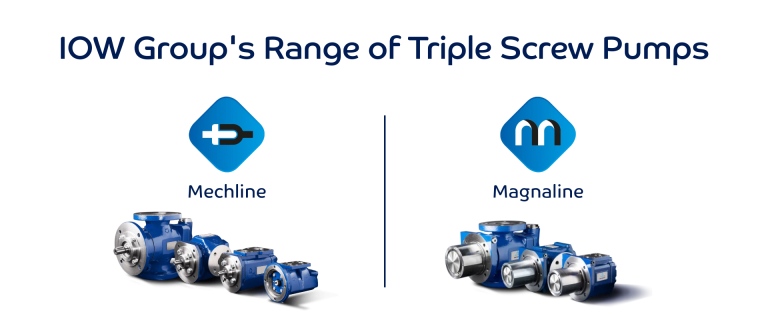
This eliminates the dynamic shaft seal that would normally be required where the rotating shaft enters the pump casing. For operators, removing this component can provide several benefits, particularly when reducing leaks and maintenance is a priority. Magnetic drive technology can be incorporated into different pump designs. IOW Group’s Magnaline range, for example, combines magnetic drive technology with positive displacement triple screw pumps.
Why Use a Sealless Magnetic Drive Pump?
1. Reduce the Risk of Leakage
Perhaps the most significant advantage of a sealless magnetic drive pump is improved fluid containment. A conventional mechanically sealed pump requires a seal where the rotating shaft passes through the stationary pump casing. As the pump operates, this deal is exposed to friction and wear. Overtime, deterioration can potentially result in leakage.
A magnetic drive design removes this particular leakage path because torque is transmitted magnetically without a conventional shaft passing through the containment area. This can be particularly valuable when the cost or consequences of leaking fluid are significant. Even relatively small amounts of lost oil can create additional cleaning requirements, increase lubricant consumption and contribute to waste. In some environments, leakage can also present operational, environmental, or safety concerns. Preventing leaks at their source provides a cleaner alternative.
Mechanical seals perform an important job, but they are also consumable components. Operating conditions including temperature, contamination, lubrication, and fluid characteristics can all influence seal life. Eventually, a worn mechanical seal may need to be serviced or replaced. Every additional maintenance task requires time and resources. Depending on the application, equipment may also need to be stopped while maintenance is completed.
A sealless magnetic drive pump eliminates the need to routinely replace a conventional mechanical shaft seal. This doesn’t mean the entire pump is maintenance-free. Pumps should always be inspected and maintained according to their operating conditions and the manufacturers recommendations. However, removing a commonly serviced component can simplify the maintenance requirements associated with the pump and potentially reduce lifetime servicing costs.
Maintenance costs are not limited to replacement components and engineering labor. When a critical pump needs unexpected attention, the resulting downtime can be considerably more expensive than the repair itself. A leaking or failed seal could require the pump to be taken out of operation while the cause is investigated and the repairs are completed.
For industries where equipment is expected to operate continuously, reliability becomes extremely important. Removing the mechanical shaft seal eliminates one potential failure and maintenance point from the pumping system. Choosing a reliable pump design can therefore contribute to improved equipment availability and help operators minimize interruptions to normal operations.
4. Support Cleaner and Safer Operations
Fluid leaks can quickly create problems around machinery. Leaking lubricating oil may need to be cleaned, contained and disposed of correctly. It can also create slip hazards and increase the risk of contamination around equipment.
The consequences become more significant when the fluid being transferred presents additional environmental or operational concerns. Keeping the pumped liquid fully contained can therefore help operators maintain a cleaner working environment. This is particularly valuable where equipment installed in difficult-to-access areas or where leakage would be disruptive to surrounding machinery.
Reducing leakage isn’t only a maintenance consideration. It can also contribute to more sustainable operations. Lubricants and other oils require resources of manufacture, transport and ultimately dispose of. Losing fluid through leaking seals creates unnecessary waste and may increase the amount of replacement oil required.
A sealless pump helps address the issue at the source by keeping the working fluid contained within the system. Over the lifetime of equipment, preventing repeated small losses can contribute to reduced oil consumption and waste. For businesses looking for practical ways to improve sustainability without compromising on operational performance, reducing fluid leakage is a relatively straightforward place to start.
The cheapest pump to purchase isn’t necessarily the least expensive pump to operate. When comparing different pump technologies, businesses should consider the total cost throughout the equipment’s working life.
This includes:
- Initial purchase price
- Replacement seals and spare parts
- Planned maintenance
- Engineering labor
- Fluid losses
- Cleaning and waste management
- Unplanned repairs
- Production or operational downtime
A magnetic drive pump may require greater initial investment than a mechanically sealed alternative. However, reducing seal replacement, maintenance requirements and the risk of leakage can create savings throughout the life of the pump. For applications where reliability is particularly important, the long-term value of reducing maintenance and downtime may significantly outweigh the initial difference in purchase price.
Where are Magnetically Sealed Pumps Used?
Magnetically sealed pumps can be suited to a wide range of industries and applications where lubricating or other suitable fluids needs to be transferred reliably. Typical applications include transferring and circulating lubricating oil, supplying fuel and lubrication to engines, moving oil within industrial processes, and supporting large hydraulic systems.
This makes the technology relevant across sectors including marine, power generation, mining, transport, agriculture, construction and other demanding industrial environments. However, pump selection should always be based on the individual application. Fluid viscosity, operating temperature, required pressure, flow rate and other system requirements all need to be considered before selecting the correct pump.
Could Sealless Pump Technology Improve Your Pumping System?
A pump may represent just one part of a much larger system, but its reliability can have a considerable impact on the operation as a whole. Mechanical seals provide an effective solution for many applications, but their exposure to wear means inspection, maintenance, and eventual replacement must be considered.
Sealless magnetic pumps provide an alternative by eliminating the conventional mechanical shaft seal altogether. For operators, this can mean less leakage, reduced maintenance, lower oil waste and improved long-term reliability.
IOW Group’s Magnaline range brings these advantages, providing a reliable solution for transferring lubricating oils and other suitable fluids across a wide range of applications.