
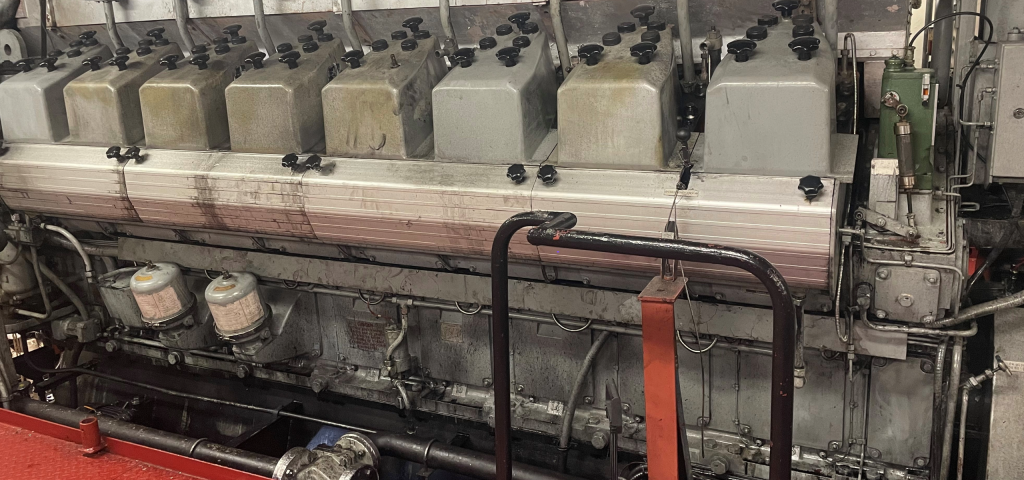
Engine technology has advanced considerably in recent years. Increasingly stringent emissions requirements, alongside pressure to improve efficiency and reduce environmental impact, have influenced everything from combustion and fuel formulation to bypass filter technology.
Today’s engines can burn fuel more efficiently and produce cleaner exhaust emissions than previous generations. However, cleaner combustion does not mean that harmful contamination has disappeared. Soot, carbon, and other fine particles can still enter lubricating oil and circulate through an engine.
For operators, this creates an important challenge: as engines become more advanced, the technology used to keep their oil clean also needs to evolve.
Effective oil filtration can play an important role in controlling contamination, protecting critical components and helping operators maintain the condition of their lubricating oil.
Modern Engines Place New Demands on Lubricating Oil
Changes to engine design have helped manufacturers achieve better combustion and lower emissions. For example, piston rings can be positioned closer to the top of the piston, reducing areas where fuel may not burn completely. This can contribute to improved combustion and lower hydrocarbon emissions.
However, contamination can still find its way into the crankcase and ultimately into the lubricating oil. Modern engines have also become more efficient in their use of oil. With less lubricant being consumed and subsequently replaced with fresh makeup oil, maintaining the quality of the oil already circulating within the system becomes particularly important.
Instead of relying solely on scheduled oil replacement, controlling contamination throughout the lubricant’s working life can help operators get more from their oil while protecting valuable equipment.
Lubricants Are Evolving Too
Engine design is not the only thing that has changed. Lubricating oils have also been reformulated to meet the requirements of newer engines and emissions technologies. Modern oils are engineered to provide effective lubrication while supporting cleaner operation and controlling deposits and ash formation.
One important measurement used when assessing engine oil is Total Base Number (TBN). TBN provides an indication of an oil’s reserve alkalinity and its ability to neutralize acidic compounds during operation. Understanding lubricant condition is therefore essential. Regular oil analysis can provide information about viscosity, contamination, wear metals and lubricant degradation, helping operators make more informed decisions about oil changes and maintenance. Oil filtration compliments oil-condition monitoring by continuously removing contamination rather than allowing it to remain in circulation.
What Does Soot Do to an Engine?
Soot is a carbon-based by-product of combustion. When it enters the lubricating oil, particles can remain suspended and repeatedly circulate through the engine. As contamination levels rise, soot can contribute changes in oil condition, including thickening and deposit formation. Fine particles also contribute to abrasive wear.
Lubricating oil performs the critical job of separating moving metal surfaces by maintaining a protective oil film to reduce friction, minimizing wear between engine components. However, contaminated oil can make this difficult. Bearings, camshafts, piston assemblies and other closely toleranced components can all be exposed to contaminants circulating with the lubricant. Reducing the concentration of these particles can therefore support better component protection. The difficulty is that many contaminants are extremely small, presenting a challenge for conventional oil filtration.
Why Can't Full-Flow Filters Remove Everything?
Every engine requires an adequate and reliable supply of lubricating oil. A full-flow oil filter is designed with this requirement in mind. Typically positioned after the oil pump, it processes the oil flowing towards critical engine components. Its primary challenge is balancing two requirements: removing contamination while maintaining sufficient oil flow.
A finer filter media can generally capture smaller particles, but it also creates greater resistance. This becomes particularly significant during a cold start, when the viscosity of the lubricant is higher and the oil is more difficult to move through restrictive filtration media. Oil supply must take priority because insufficient lubrication could quickly damage an engine. Full-flow oil filtration therefore cannot simply become progressively finer in an attempt to capture every contaminant.
Many systems also incorporate a bypass mechanism. If restriction across the oil filter becomes too high, oil can bypass the filter media to ensure that adequate lubrication continues to reach the engine. This is necessary for engine protection, but it demonstrates why relying on full-flow filtration alone has limitations.
The Problem of Fine Contamination
Even with an effective full-flow filter installed, fine soot, carbon and other contamination can remain suspended within the lubricating oil. These particles can repeatedly circulate through bearings, oilways and other close tolerance areas. Over time, contamination can contribute to wear, deposits and deterioration in lubricant condition.
One solution is to introduce a secondary filtration system designed specifically to provide finer contamination control without restricting the engine’s primary oil supply. This is where bypass oil filtration becomes valuable.
How Does A Bypass Filter Work?
Rather than processing the engine’s entire lubrication flow at once, a bypass filtration system takes a smaller proportion of the oil and cleans it separately. Because the bypass system is not responsible for supplying all of the oil required for immediate engine lubrication, it can concentrate on removing finer contamination. Once processed, the cleaned lubricant is returned to the sump or crankcase. As operation continues, more of the oil passes through the secondary filtration system, progressively reducing the concentration of contaminants. Full-flow and bypass filtration therefore perform different roles.
The full-flow filter protects the engine while maintaining the required oil supply, whereas bypass filtration provides an additional level of oil cleaning.
Why Use Centrifugal Oil Filtration?
Bypass filtration does not have to rely on disposable filter media. A centrifugal oil filter uses centrifugal force to separate contaminants from lubricating oil. Oil entering the centrifuge causes the internal bowl to rotate at high speed. The resulting centrifugal force drives denser contaminants towards the outside of the bowl, where they are retained until the unit is serviced. Cleaner oil can then return to the lubrication system.
Because this process separates contaminants rather than relying solely on forcing oil through fine barrier media, centrifugal filtration offers a different approach to managing soot and fine particles. It can operate alongside the engine’s existing full-flow filter, providing additional oil cleaning without replacing the filtration that is essential to the engine’s lubrication system.
How IOW Group Centrifugal Oil Filters Improve Oil Cleaning
IOW Group bypass filters are designed to provide enhanced contamination removal alongside existing full-flow filtration. At the center of the technology is IOW Group‘s disc-stack bowl design. The discs create additional surface area inside the centrifuge to support contaminant separation. As the bowl rotates, soot and other contaminants are separated from the lubricating oil and retained within the bowl.
The design also incorporates a sealed bowl, helping prevent collected contamination from re-entering the oil during servicing. IOW Group’s distributor technology is designed to minimize backpressure, while the centrifuge provides continuous secondary filtration without compromising the engine’s primary lubrication requirements.
For operators looking to upgrade older centrifugal filtration technology, IOW Group bypass filters are also designed with retrofit applications in mind, providing a straightforward route to improving oil cleanliness across a wide range of engines and machinery.
Know When Your Centrifuge Needs Attention
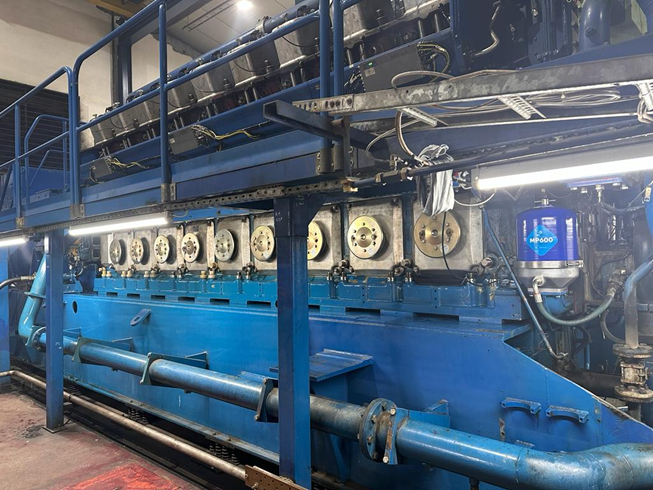
Effective bypass filtration is only useful when operators know the system is working correctly. IOW Group centrifugal oil filters incorporate remote monitoring, giving engineers greater visibility of centrifuge RPM and operation.
As contamination builds inside the bowl, changes in rotational speed can indicate when servicing is required. Rather than relying solely on predetermined servicing intervals or manually checking the centrifuge, operators can use monitoring information to better understand filter condition. This can help make maintenance more predictable and provides useful insight into filtration performance under real operating conditions.
Cleaner Oil Can Deliver Wider Operational Benefits
Removing soot and fine contaminants from lubricating oil is about more than simply achieving cleaner-looking oil. Improved contamination control can help operators:
Reduce abrasive contamination circulating through an engine
Protect bearings and other critical components from unnecessary wear
Maintain lubricant cleanliness for longer
Support extended oil-change intervals where confirmed by oil analysis
Reduce the burden on primary filtration
Extend primary filter service life
Reduce maintenance requirements
Lower lubricant consumption and waste
Reduce associated operating costs
Support equipment reliability and uptime
There can also be an important sustainability benefit. If effective bypass filtration allows lubricating oil to remain in service for longer, operators can potentially reduce the amount of new oil they consume and the volume of waste oil requiring disposal. This supports a more sustainable approach to lubrication by focusing on maintaining oil condition rather than replacing lubricant unnecessarily.
Is It Time to Upgrade Your Oil Filtration System?
Modern engines may be cleaner and more efficient, but effective contamination control remains essential. Full-flow filtration performs a vital function and will continue to form the foundation of an engine’s lubrication system. However, its need to maintain high oil flow means it cannot target every fine contaminant circulating within the lubricant.
Centrifugal bypass filtration provides a complementary solution. By continuously removing soot and fine contamination from the oil, it can help maintain lubricant cleanliness, protect engine components and reduce the amount of damaging material circulating through valuable machinery. IOW Group offers a range of centrifugal oil filters suitable for engines and equipment across marine, power generation, mining, transport and industrial applications.
Whether replacing older centrifugal technology, upgrading an existing bypass filtration system or introducing additional contamination control, IOW Group can help operators find a filtration solution suited to their application.
How clean is the oil circulating through your engines and machinery?
Contact IOW Group to learn more about centrifugal oil filtration and discover how cleaner oil could help you reduce maintenance, protect your equipment and improve operational reliability.